


Intestinal pleasures.
L-glutamine is an important amino acid for the body. In muscle cells, L-glutamine is the most abundant free amino acid, and for intestinal cells, L-glutamine serves as the main source of energy. In stress situations such as severe illnesses, injuries, burns and operations, the body's own glutamine production is often unable to meet the demand, and a supply from outside (diet, supplements) becomes necessary.
L-glutamic acid is a non-essential amino acid that the organism can produce in sufficient quantities from various precursors. L-glutamic acid itself serves as a precursor for L-glutamine.
The product is suitable for vegans and vegetarians. ( vegan / vegi / vegetarian)

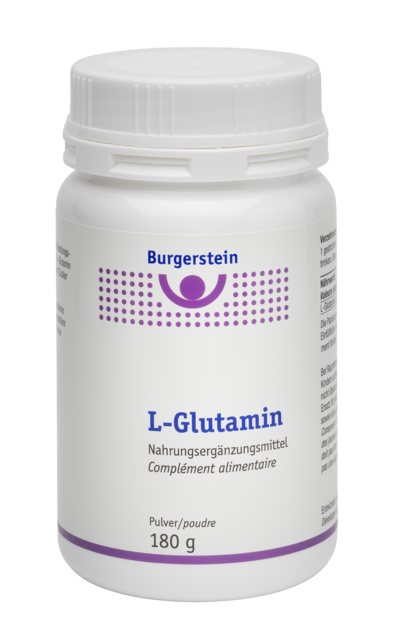
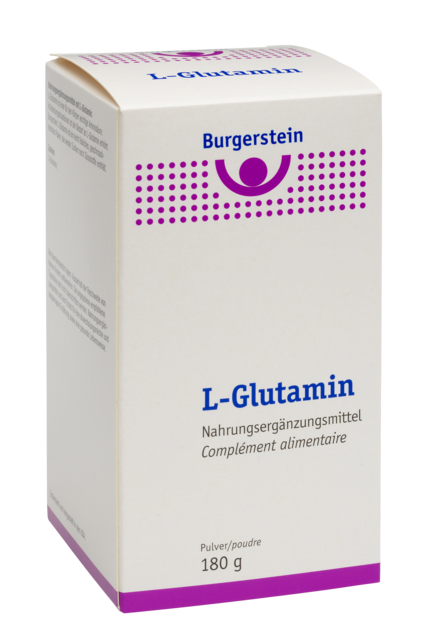


Content
180 gr / Powder
PZN 5571635
RRP 29,90 €
PZN 5571635
RRP 29,90 €
Recommended intake
3 gr. / day


Glutamine in food
Glutamine is needed in particularly large quantities when you are building muscles or your immune system is weakened. Stress also increases the need for glutamine.
- Soy contains a lot of glutamine. In 100 g there is an average of 6.5 g of glutamine. However, eating soy in large quantities is not recommended because it is usually genetically modified.
- Glutamine is also found in dairy products - per 100 g, cream cheese contains 2.5 g, milk 0.75 g, yoghurt 0.76 g glutamine. Cheeses per 100 g: Tilsit 5.8 g, Edam 6.2 g and Gouda with 6.3 g glutamine.
- Peanuts also have a high glutamine content and are relatively high at 5.6 g per 100 grams. However, nuts also contain a lot of fat.
- Spelt flour has a value of 5.1 g, pasta 4.9 g.
- Pork also contains a lot of glutamine. For example, in 100 g of minced pork you will find 4.8 g of glutamine.
Your need for glutamine also increases when you are ill, because the immune cells need glutamine as a building material and energy supplier.

| Nutritional values |
Per daily portion (3 gr.) |
|---|---|
| L-glutamine | 3,00 g |
Intake recommendation
Stir 1 level measuring spoon (=3 g) in a glass of water and drink.
Consumer group
Athletes, Women, Men, Vegans, Vegetarians
Field of use
Sports, Intestinal health, Energy, Immune system / cold
Ingredients
L-glutamine
Additional information
Food supplements are not a substitute for a balanced nutrition. A balanced nutrition and a healthy lifestyle are important. Do not exceed the recommended daily dose. Store out of the reach of small children and at room temperature - please follow the corresponding package instructions. | RRP: Recommended Retail Price.
Important information
The package contains 60 servings (3 g each).


